
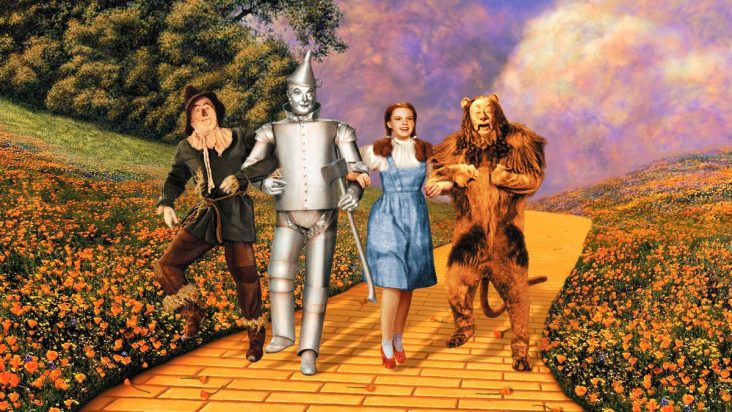
There are movie classics, then there is The Wizard of Oz. Released in 1939, it has endured as a true representation of what cinema can accomplish for nearly 90 years. Be that as it may, the movie wasn’t always the classic we view it as now. In actuality, it took decades for the movie to achieve its legendary status. And that status wasn’t achieved on the silver screen. Instead, it was television that turned the tide.
The Wizard of Oz is filled with classic lines and imagery and yes, it was a success by some measures in its original release. However, it was also a victim of its own ambitions to some degree.
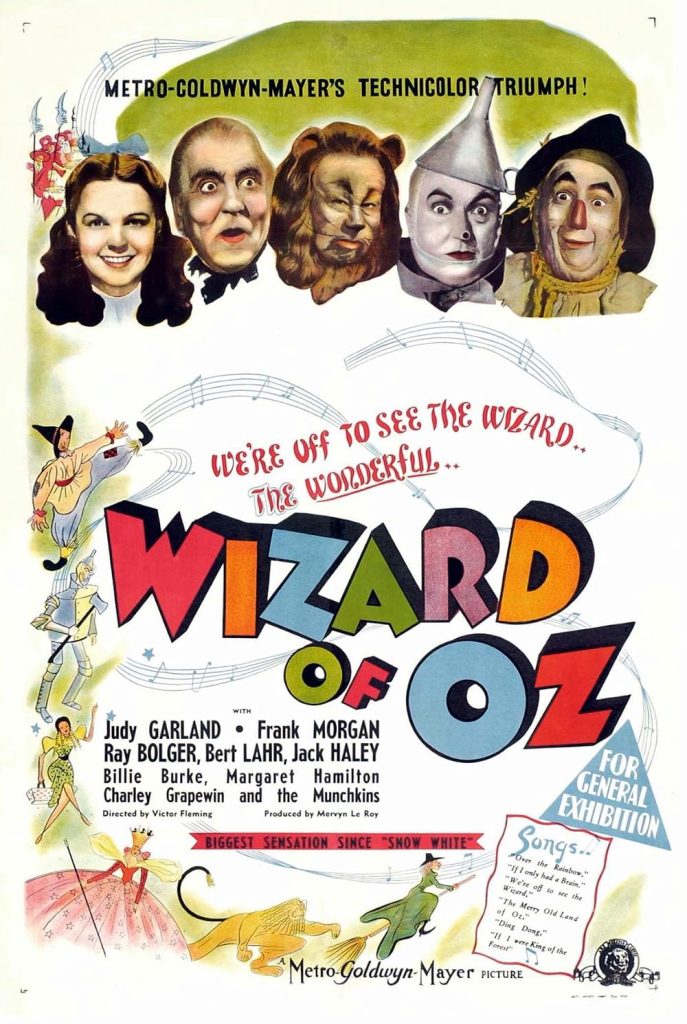
“With the average national ticket prices at 25 cents (more than half of its audiences were juvenile patrons who paid a dime or 15 cents), it was not expected to recoup its $3 million in production and promotion costs,” said William Stillman, co-author of The Wizardry of Oz: The Artistry and Magic of the 1939 M-G-M Classic, speaking with the Los Angeles Times in 2013.
In short, because the movie was so expensive, it had a very hard time recouping its costs. Critically, it was a success at the time, as it was nominated for six Academy Awards, including best picture. It won Oscars for its original score and best song for “Over the Rainbow.”
This was also in the era before VHS and home video, so those who missed the movie in its original run either didn’t see it at all or had to catch it when it was re-released in 1949 and 1955. While those re-releases helped make Dorothy and the Wicked Witch of the West unmistakable icons of film, it was the advent of television and the need for programming that truly changed everything for this cinematic treasure.
The Wizard of Oz wasn’t always the beloved hit it’s now viewed as
CBS first aired The Wizard of Oz on TV in 1956, a full 17 years after it first hit theaters. Again, this was before cable TV and there were only a few networks. So if something aired, it generally got a lot of attention. That’s precisely what happened with Oz, as millions tuned in to see Dorothy follow the Yellow Brick Road with the Tin Man, the Cowardly Lion and Scarecrow.
“The crazy thing is that the Wizard of Oz was first shown on network television in 1956, and then it was held for three years,” John Fricke, Wizard of Oz and Judy Garland historian, said to ABC 57 earlier this year. By that time, Judy Garland had become a huge celebrity and people who missed it in theaters finally had the chance to see it for themselves. That first viewing certainly went a long way in helping, as it drew a massive 45 million viewers.
CBS produced a whole two hour special hosted by Bert Lahr, who played the Cowardly Lion. It was a massive hit, but it was also just a one-off. It was three years later when things really took off.
“Starting in 1959, it became this annual event that grew and grew and grew because there were three networks, and it was only on once a year, and there was no home video or streaming or anything like that. And so, if you wanted to see The Wizard of Oz, and once you’d seen it, you wanted to see it again,” Fricke added.
The 1959 airing brought in even more viewership, according to People. That’s when it became an annual tradition and, more importantly, helped completely change the movie’s legacy in the cultural sphere.
“It changed the whole nature of that movie,” film historian Scott Essman said to the Los Angeles Times. “It became an event to see this film.”
TV, not the box office, helped cement The Wizard of Oz’s cinematic legacy
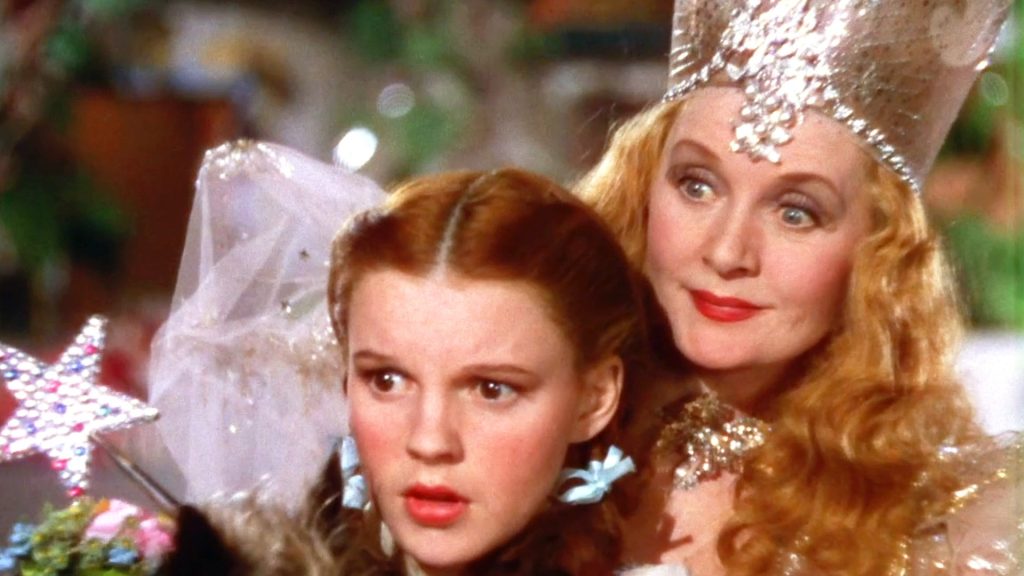
Following the 1959 airing, a new contract between CBS and MGM was negotiated for a third airing. Subsequent showings established The Wizard of Oz as an annual ‘special event.’ Not unlike how Christmas specials like How the Grinch Stole Christmas remain annual staples to this day.
It may be hard to imagine in the streaming era that gathering around the TV at a specific time to watch a movie with commercials was an event, but it was. VHS didn’t become popular until the 1980s. Until then, TV was king. For movies that were no longer in theaters, television networks could do a lot to help firm up their legacy. That was never more true than it was for The Wizard of Oz, which is now firmly considered one of the greatest movies of all time. People are still picking up on all of the little details to this day.
The movie has since been released on every home video format, including DVD, Blu-ray and 4K Ultra HD. New generations have found it throughout the decades. In recent years, the success of the Wicked movies has also helped build a bridge back to the original Wizard of Oz for younger viewers. The Sphere in Las Vegas also built an immersive show around the movie, which has generated millions in revenue since it launched.
The Wizard of Oz ranked at number ten on AFI’s 100 years…100 movies list, right alongside other stone cold classics like The Godfather and Citizen Kane. It also still ranks in IMDB’s top 250 movies.
Without CBS and these now-legendary TV airings of The Wizard of Oz, its legacy may look very different today.